Mat Pilates develops strength, mobility, coordination and body awareness without relying on a large machine.
Mat Pilates is not a simplified version of Reformer Pilates. It is a complete part of the method, with its own challenges, progressions and benefits.
Mat Pilates is performed mainly on a padded mat using body weight and gravity as resistance.
The exercises may be completed lying, seated, kneeling, side-lying, standing or in weight-bearing positions. Some classes use only the mat, while others include small equipment to change how the movement feels.
The simplest explanation: Mat Pilates teaches you to create strength and control without relying on a moving carriage or spring system.
On a Mat, the body has less external support. You are responsible for controlling the movement against gravity and organising the body without a carriage or spring helping to guide the direction.
The position of the arms, legs and trunk changes how demanding an exercise feels.
Moving a limb away from the body or holding a longer lever increases the work required.
You cannot rely on springs or a moving platform to provide feedback.
Once the exercises are understood, many can be practised almost anywhere.
It can, but it does not have to.
Small equipment is used to add resistance, offer support, create feedback or make a familiar exercise feel different.
Provides resistance and feedback for the arms, legs and trunk.
Can resist a movement, assist it or help guide direction.
May provide support, mobility, instability or a balance challenge.
Add strength and coordination while the Pilates principles remain central.
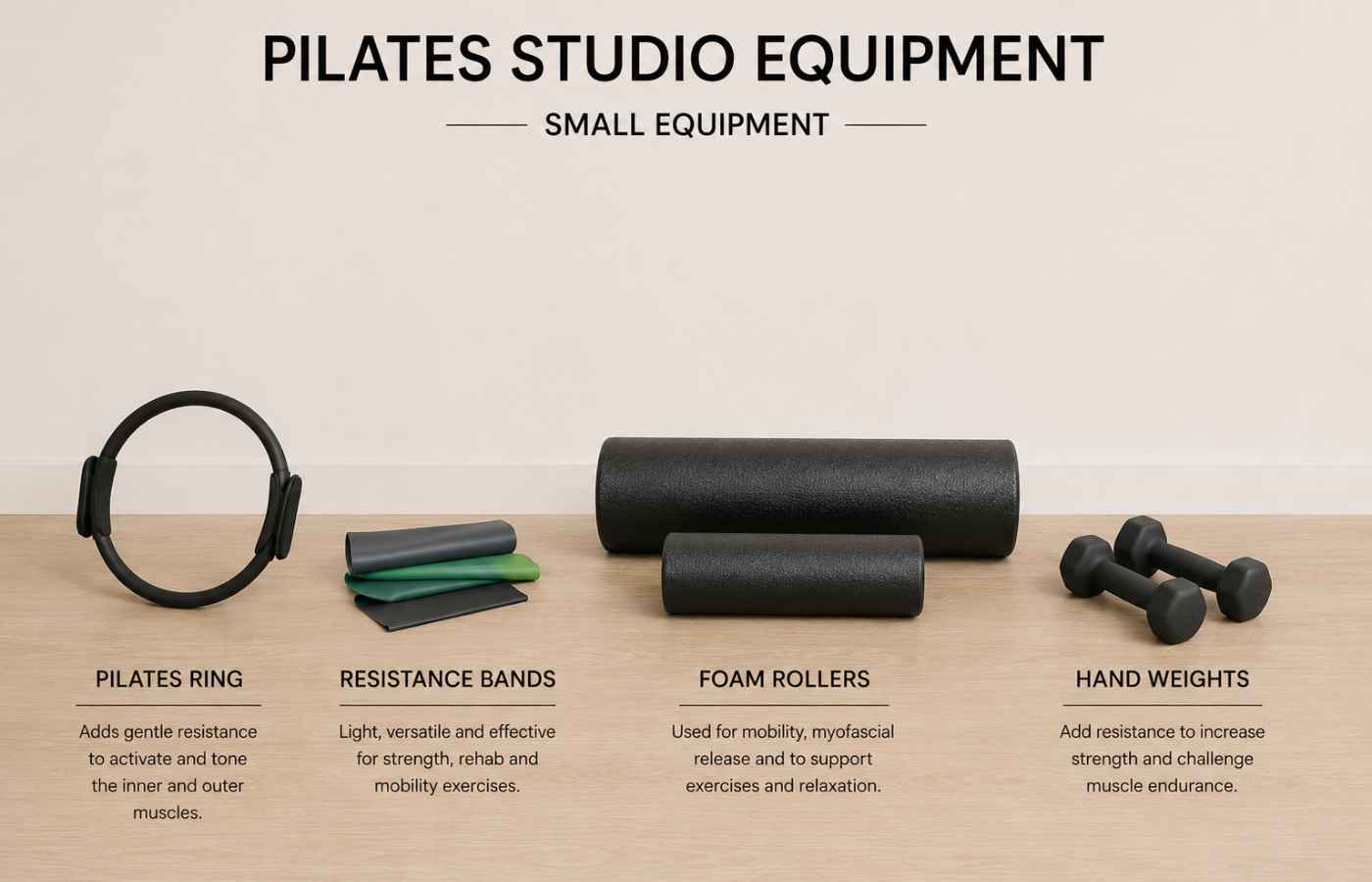
Small equipment changes the movement experience. It does not define whether a class is Pilates.
Not necessarily. The lack of a machine can make some Mat exercises more demanding because there is less support and no spring assistance.
Neither Mat nor Reformer is automatically more advanced. Both can be adapted from introductory to highly challenging levels.
The body must support itself without springs or a moving carriage.
Movement is organised against gravity rather than guided by equipment.
The spine and joints move through varied positions and ranges.
Breathing, trunk control and limb movement are combined.
Kneeling, standing and single-side exercises challenge stability.
The mat provides a simple reference for noticing weight, alignment and tension.
Mat Pilates is generally whole-body exercise rather than a system designed to isolate one muscle at a time.
The trunk may stabilise while the legs move. The shoulders may support body weight while the hips and spine control the position. Several areas often work together.
It is more useful to think about coordinated movement than one isolated muscle.
Mat work is a foundational part of Pilates and remains valuable even when someone also practises on equipment.
It develops independence because the person must create the control rather than rely on springs or a carriage. It is also accessible, portable and easier to practise outside the studio.
Mat Pilates is not what you do until you are ready for the Reformer. It is a complete and demanding way to practise Pilates in its own right.
Yes. A well-taught Mat class can be an excellent starting point.
The instructor can adapt the position, range, pace and complexity. Small equipment may also provide support or feedback.
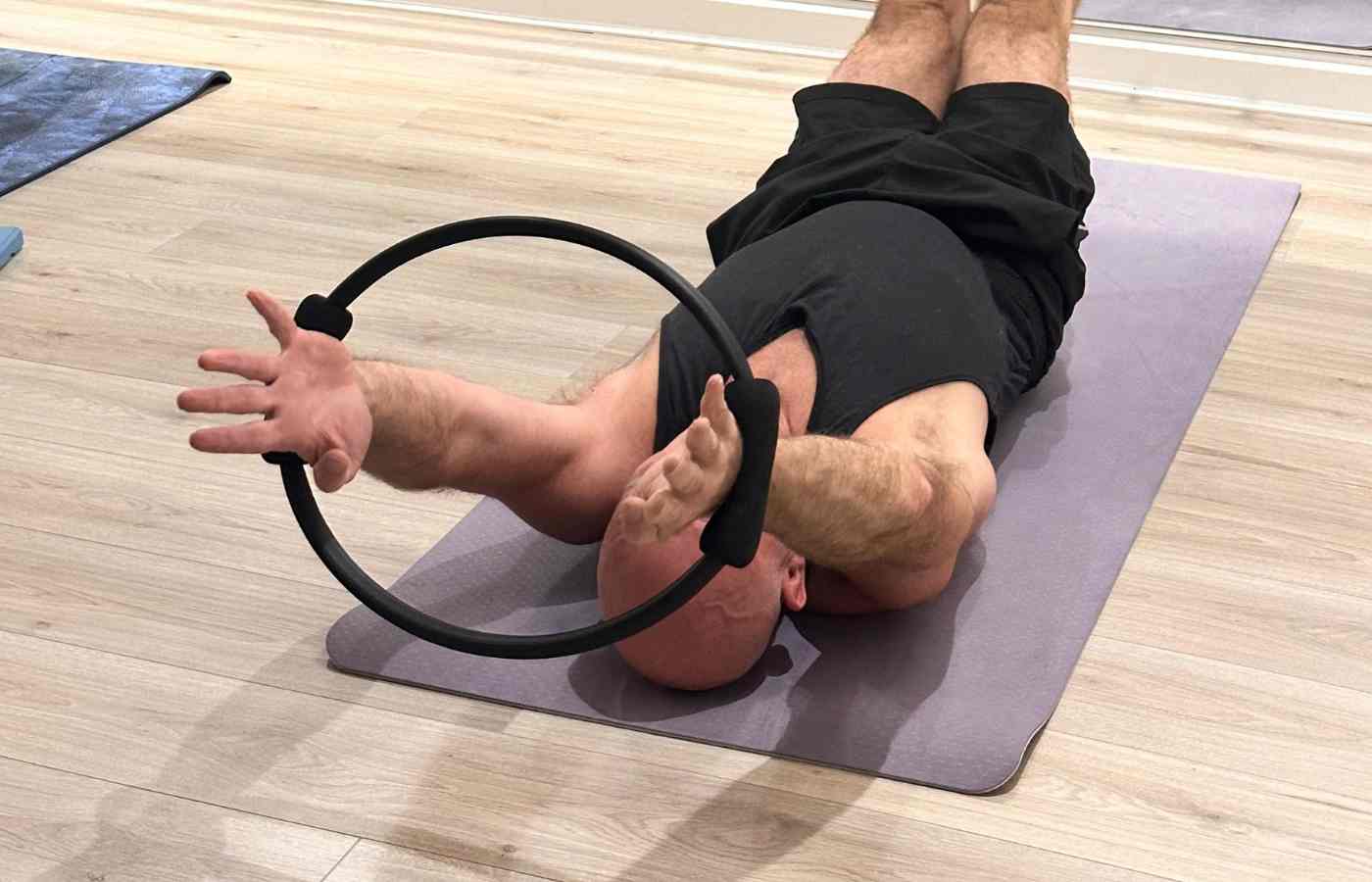
Classes vary between teachers and levels, but most include several positions and movement patterns.
The class may begin with breathing, mobility or simple movements to establish alignment and control.
The session may include lying, side-lying, seated, kneeling, standing and weight-bearing exercises.
The final movements may reduce the pace and include mobility, stretching or standing integration.
Some classes follow a more traditional sequence. Others combine classical exercises with contemporary movement and small equipment.
No. Without spring assistance, many exercises require significant control and strength.
Mobility is part of the method, but Mat Pilates also develops strength, balance and coordination.
No. Exercises can be adapted to the range you currently have.
The trunk is important, but Mat Pilates can work the whole body.
No. Weights can be used while maintaining control, precision, breathing and whole-body movement.
Results depend on teaching, consistency and progression rather than one piece of equipment.
People often enjoy Mat Pilates if they:
The best class is the one taught at a level that suits your experience, health and confidence.
Our beginner-friendly classes introduce the movements gradually and show you how Mat Pilates can develop strength, mobility and confidence.

