Both can build strength, mobility, balance and body awareness. This guide explains how they differ, what they share and how to decide which approach may suit you.
Mat and Reformer Pilates are two ways of practising the same method. Neither is automatically better, but the experience of each can feel quite different.
Mat Pilates is performed on a mat using mainly your own body weight and gravity. Reformer Pilates uses a spring-based machine that can add resistance, provide support and give physical feedback as you move.
Both follow the same Pilates principles and both can improve strength, mobility, posture and body awareness. Mat may appeal if you enjoy simple, equipment-free movement; Reformer may appeal if you prefer the guidance and varied resistance of a machine. The better choice is the one you enjoy and can practise consistently.
| Mat Pilates | Reformer Pilates | |
|---|---|---|
| Equipment | A mat and sometimes small props | A spring-based Reformer machine |
| Resistance | Body weight and gravity | Springs, body weight and carriage position |
| Feedback | Your body awareness and the instructor | The instructor plus the carriage and springs |
| Beginner friendly | Yes | Yes, ideally in a beginner class |
| Can it be challenging? | Yes | Yes |
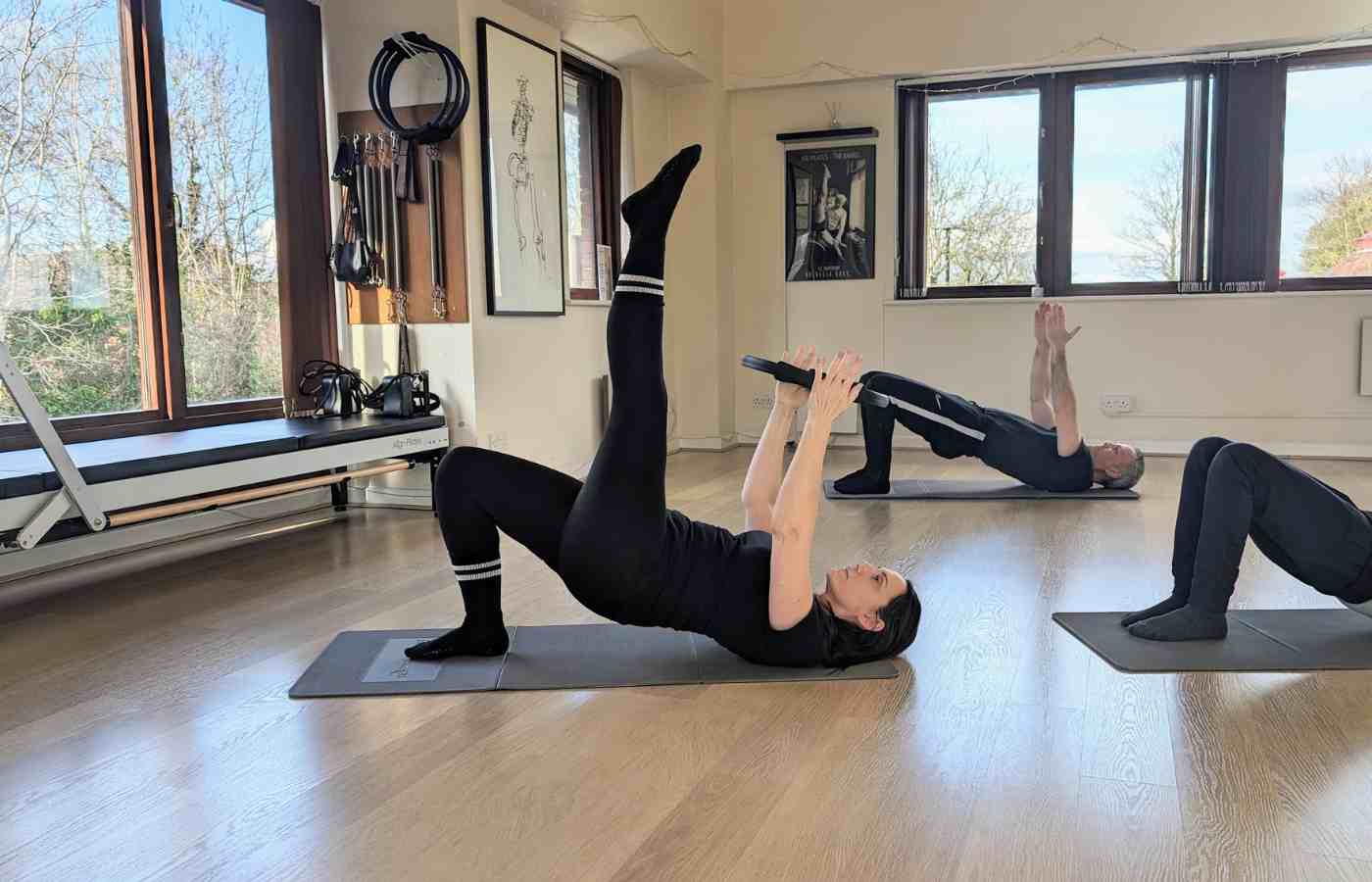
Mat Pilates is performed on the floor, usually with a mat and sometimes with small equipment such as bands, balls, rings, rollers or light weights.
Because there is no large machine supporting or guiding you, your body has to organise the movement itself. This can make apparently simple exercises surprisingly demanding.
You work closely with your own body weight and learn how to control the trunk, pelvis, spine and limbs without relying on a machine.
The exercises can be practised without specialist equipment, making Mat Pilates useful for building a strong understanding of the method.
Reformer Pilates uses a specialist machine with a moving carriage, springs, straps and a footbar. The spring settings change the amount and direction of resistance.
The Reformer can support part of your body weight, add resistance or give you feedback about whether you are moving evenly. It does not perform the exercise for you.
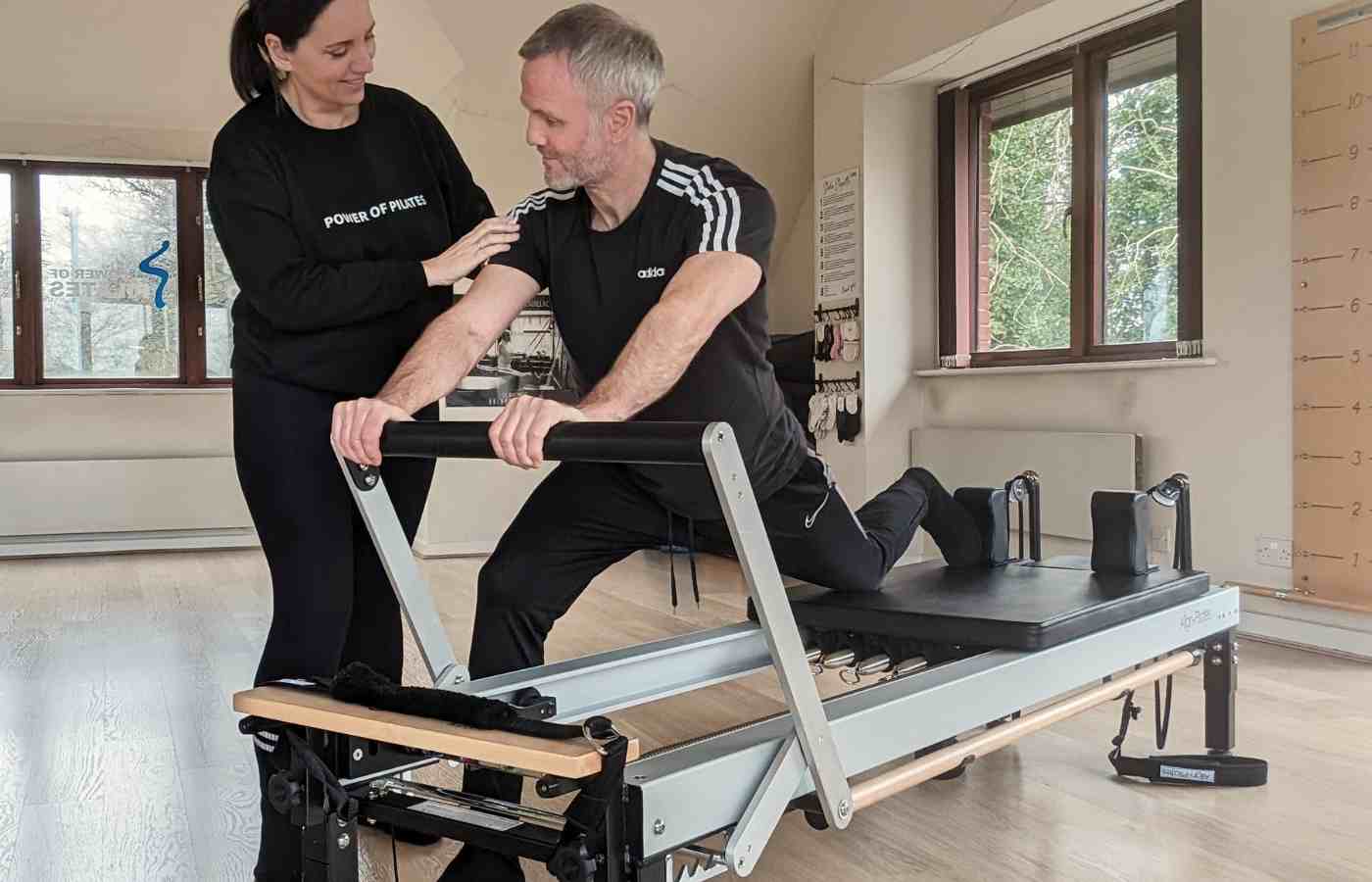
The moving carriage and springs give immediate feedback. You can often feel when one side is working differently or when the carriage is moving unevenly.
The equipment allows exercises to be performed lying, sitting, kneeling and standing, with resistance adjusted to suit the movement.
| Question | Mat Pilates | Reformer Pilates |
|---|---|---|
| What equipment is used? | A mat, body weight and sometimes small equipment. | A spring-based Reformer with a carriage, straps and footbar. |
| Where does resistance come from? | Mainly gravity, body weight and small props. | Springs, body weight and the position of the carriage. |
| Does one offer more support? | The floor provides a stable base, but your body creates most of the support. | The machine can support part of your body or guide the direction of movement. |
| Which gives more feedback? | Feedback comes mainly from your own body awareness and the instructor. | The carriage and springs provide additional physical feedback. |
| Which is more portable? | Mat exercises can be practised almost anywhere. | A Reformer class requires specialist equipment. |
| Which is harder? | Either can be easier or harder depending on the exercise and how it is taught. | Either can be easier or harder depending on the springs, position and exercise. |
Not necessarily. The Reformer can make some movements more accessible because the springs or straps provide support. In other exercises, those same springs create extra resistance and make the movement considerably harder.
Mat Pilates can also be deceptively difficult. Without straps, springs or a moving carriage, you may have to stabilise more of your own body weight.
The machine does not determine the difficulty. The exercise, resistance, range, tempo and quality of control determine the difficulty.
Both can be suitable for beginners when the class is taught appropriately.
The machine is unfamiliar, so a dedicated beginner class gives you time to learn the carriage, springs, straps and basic positions.
The physical feedback from the machine can help some people understand a movement more clearly.
Mat beginners can learn the foundations without having to understand a large piece of equipment.
In a well-taught mixed-ability class, the instructor offers different versions so you can begin at an appropriate level.
The quality of the teaching matters more than the format. A class should explain the movement clearly and give you options rather than expecting everyone to do the same thing.
There is no need to make a permanent choice. Many people practise both because each format challenges the body in a slightly different way.
Yes. Reformer experience can help you recognise alignment, resistance and movement patterns through the feedback of the machine. Mat work then asks you to reproduce control with less external guidance.
Mat experience can also make Reformer work stronger because you already understand how to organise your body without depending on the equipment.
They are not competing versions of Pilates. They are connected parts of the same method.
No single format is automatically more effective. Progress depends on appropriate teaching, regular practice, the exercises chosen and how well you perform them.
No. Advanced Mat work can be extremely demanding because there is less external support and greater control is required.
No. Exercises and spring settings can be adapted, although a private session may be more suitable for someone with complex needs or significant movement restrictions.
Both develop trunk strength and control. The exercises and quality of movement matter more than whether they are performed on a mat or machine.
No. You can make excellent progress practising only Mat or only Reformer. Doing both simply gives you more variety.
Our introductory offers give you enough time to experience Pilates properly. You can also contact us with any questions before choosing a class.

