Many people begin Pilates because their back feels stiff, weak or uncomfortable. With the right teaching and progression, Pilates can be a useful part of becoming stronger and moving more confidently.
Every back problem is different, but appropriately taught Pilates has helped many people return to regular movement, rebuild strength and feel more capable in everyday life.
Pilates does not focus on one muscle or one perfect posture. It develops the body as a whole, combining strength, mobility, coordination, breathing and body awareness.
This makes it well suited to people who need to build confidence gradually rather than jump straight into fast or high-impact exercise.
The trunk, hips, legs, back and shoulders can become stronger over time.
Exercises encourage controlled movement through comfortable ranges.
Gradual progressions can help people feel less worried about moving a sensitive back.
Regular movement may help reduce stiffness and make daily tasks feel easier.
You learn to notice tension, effort, alignment and movement habits.
Pilates develops more than the abdominal muscles alone.
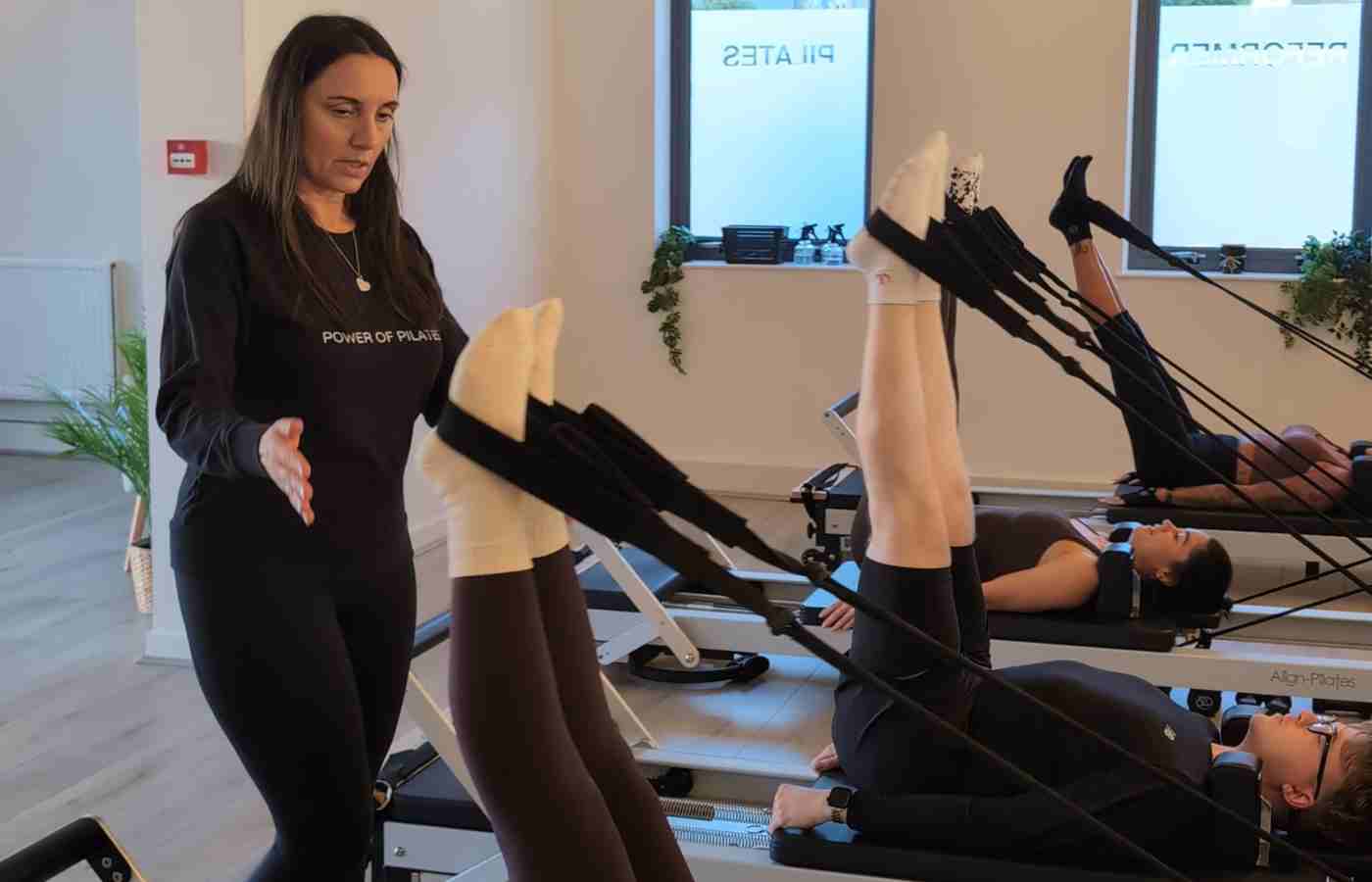
Research suggests that Pilates can be an effective way to help manage persistent, non-specific low back pain for many people. Studies have reported improvements in pain, function and quality of life, particularly when exercises are taught well and progressed appropriately.
Rather than focusing on one area alone, Pilates combines strength, mobility, balance, coordination and body awareness. This whole-body approach is one reason it is commonly recommended as a form of exercise for people with ongoing back pain.
Like any form of exercise, Pilates is not a cure for every back condition. The most important factor is choosing the right type of class for your current symptoms and progressing at a pace that is appropriate for you.
Good Pilates should help you feel more capable of movement—not more frightened of it.
Power of Pilates founder Claire Roberts came to Pilates through her own experience of severe back problems, collapsed discs and spinal fusion surgery.
Pilates became an important part of rebuilding strength, movement and confidence after rehabilitation. It was not a quick fix and it did not replace medical or physiotherapy care. Instead, it provided a progressive way to keep moving and becoming stronger.
That experience still influences how we teach today: carefully, positively and without treating people as though they are permanently fragile.
The best starting point depends on your symptoms, confidence, previous experience and whether you need individual support.
| Your situation | A sensible starting point | Why |
|---|---|---|
| New to exercise or worried about movement | Restore Mat | A gentler pace with more focus on technique, breathing and controlled movement. |
| Mild, stable ongoing back pain | Beginner Mat | Builds strength and control without needing to learn a large machine. |
| You prefer more support and physical feedback | Beginner Reformer | The carriage and springs can support some movements and make progression feel clearer. |
| Complex history, recent surgery or significant restrictions | Private session | Allows the exercises, pace and equipment to be chosen around you. |
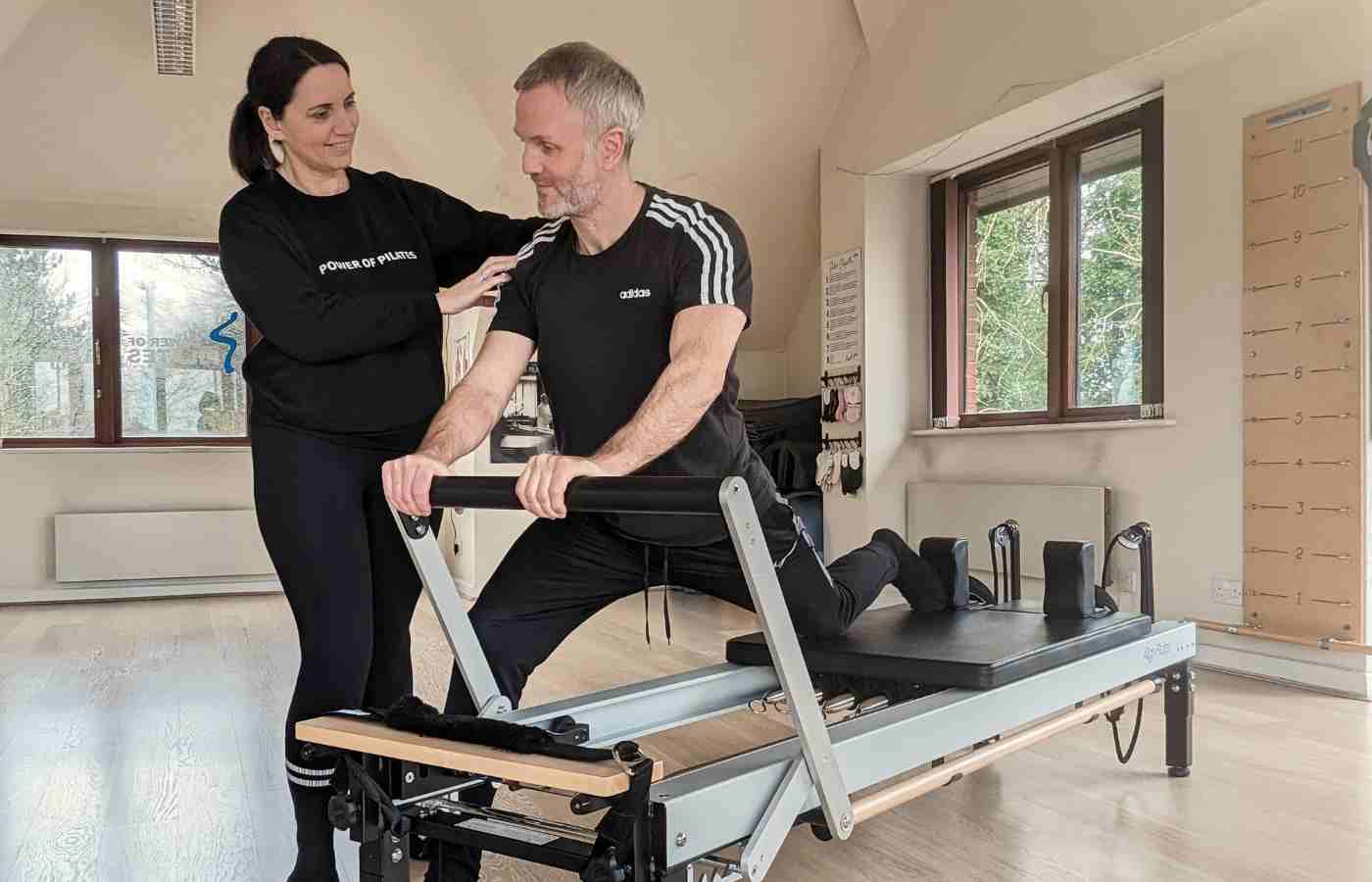
Pilates should feel manageable and purposeful. You may notice muscular effort, fatigue or mild stiffness, but the aim is not to push through sharp or escalating pain.
Pilates is exercise, not physiotherapy. An instructor can adapt and teach movement, but should not diagnose the cause of pain or replace medical care.
Most people with mild, stable back pain can begin appropriate exercise. It is sensible to speak to your GP, physiotherapist or another healthcare professional first when symptoms are new, severe, unexplained or worsening.
Recent spinal surgery or significant trauma; severe or unexplained pain; marked numbness, weakness or pain travelling into a leg; difficulty with bladder or bowel control; or symptoms that are changing rapidly.
Contact NHS 111, your GP or emergency services according to the urgency of the symptoms.
Changes such as disc degeneration and arthritis are common, particularly as we age. A scan result does not automatically mean movement is unsafe.
Short periods of rest may help during a severe flare-up, but long periods of avoiding movement can reduce strength and confidence.
The trunk is important, but Pilates also works the hips, legs, back, shoulders and arms.
Many people become stronger, more active and more confident even after long periods of pain.
Any exercise can aggravate symptoms if the level, range or pace is unsuitable. This usually means the programme needs adjusting rather than that all Pilates is unsafe.
Many people with disc-related symptoms can exercise successfully. The right starting point depends on your symptoms, stage of recovery and whether there is leg pain, numbness or weakness.
It may be. Controlled strength and mobility work can be helpful, but the exercises should be adapted around comfort and current ability.
Neither is automatically better. Reformer springs may support some movements, while Mat work develops greater independence. The class level and quality of teaching matter more.
Consistency matters more than finding one perfect number. Many people benefit from regular weekly practice, adjusted around symptoms, recovery and other activity.
If you are unsure where to begin, tell us briefly about your symptoms, previous exercise experience and any diagnosis you have received. We can explain which option is likely to be the most appropriate starting point.

