Discover the story of the man whose ideas transformed exercise around the world.
Joseph Joseph Pilates (1883–1967) was a German physical trainer who developed the exercise method now known as Pilates. Originally called Contrology, his system combined strength, mobility, breathing and control. Today, Pilates is practised by millions of people worldwide.
Joseph Pilates died in 1967, but the method he developed continues to be taught around the world. His ideas about whole-body movement, breathing, posture and control were unusual at the time and remain central to Pilates teaching today.
Some details of the method have evolved, and modern teachers may use different language or draw on current exercise science. However, the underlying ideas—quality before quantity, controlled movement and the connection between strength and mobility—remain recognisably his.
His lasting contribution: Joseph Pilates created a way of exercising in which attention, precision and control matter as much as effort.
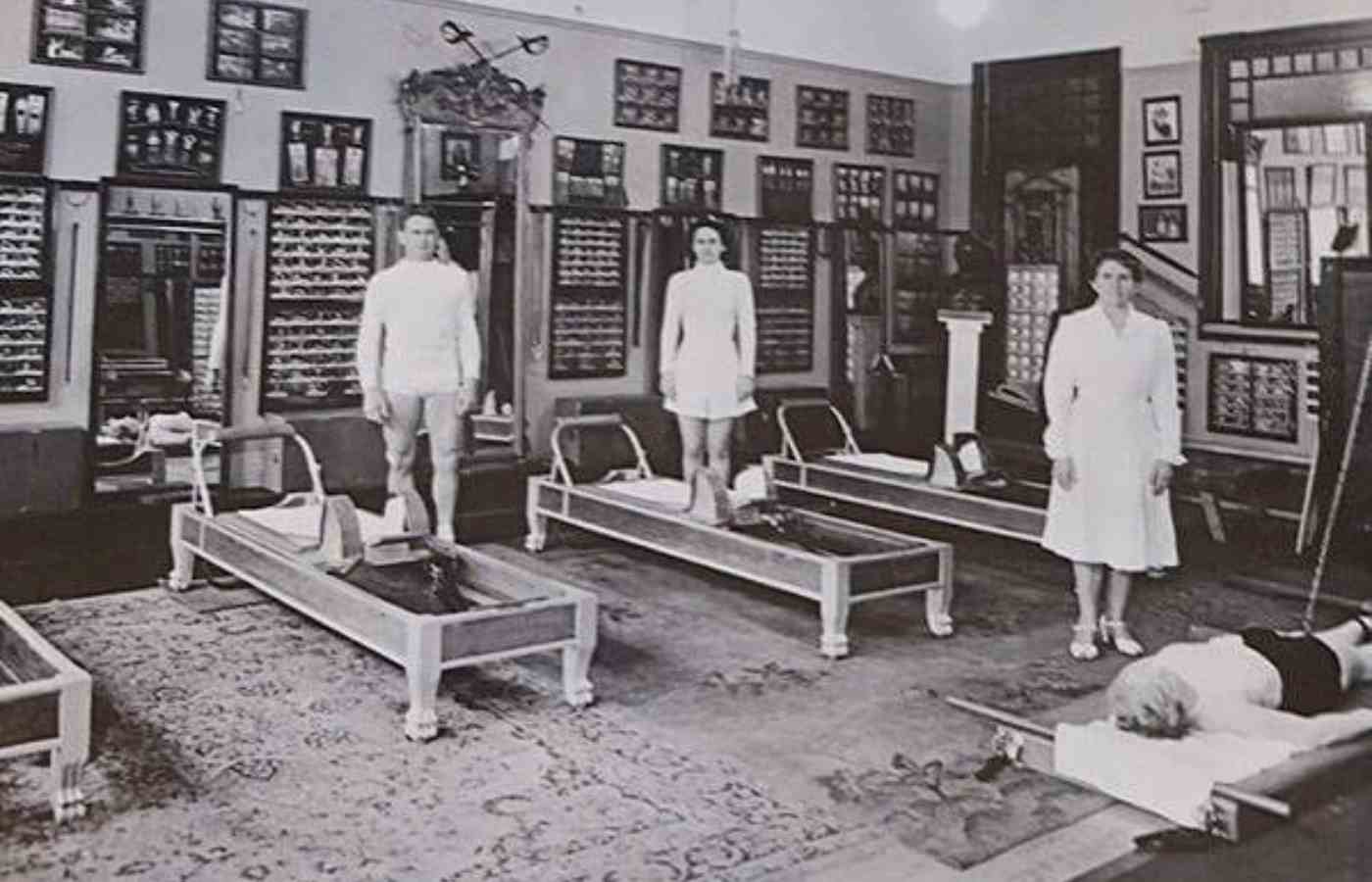
Joseph Hubertus Pilates was born in Germany in 1883. Accounts of his early life describe a strong interest in physical culture, gymnastics, boxing and self-defence.
Some popular stories about his childhood are difficult to verify, so it is sensible to treat them cautiously. What is clear is that he spent much of his life exploring how strength, breathing, posture and disciplined movement could support physical wellbeing.
During the First World War, Joseph Pilates was interned as a German national in Britain. He was later held at Knockaloe internment camp on the Isle of Man.
During this period, he continued to practise and teach exercise. This stage of his life is often linked with the development of ideas that later became part of his method.
Stories are frequently told about him attaching springs to hospital beds to help injured or unwell internees exercise. The precise details are difficult to confirm, but springs and supported movement later became defining features of his apparatus.
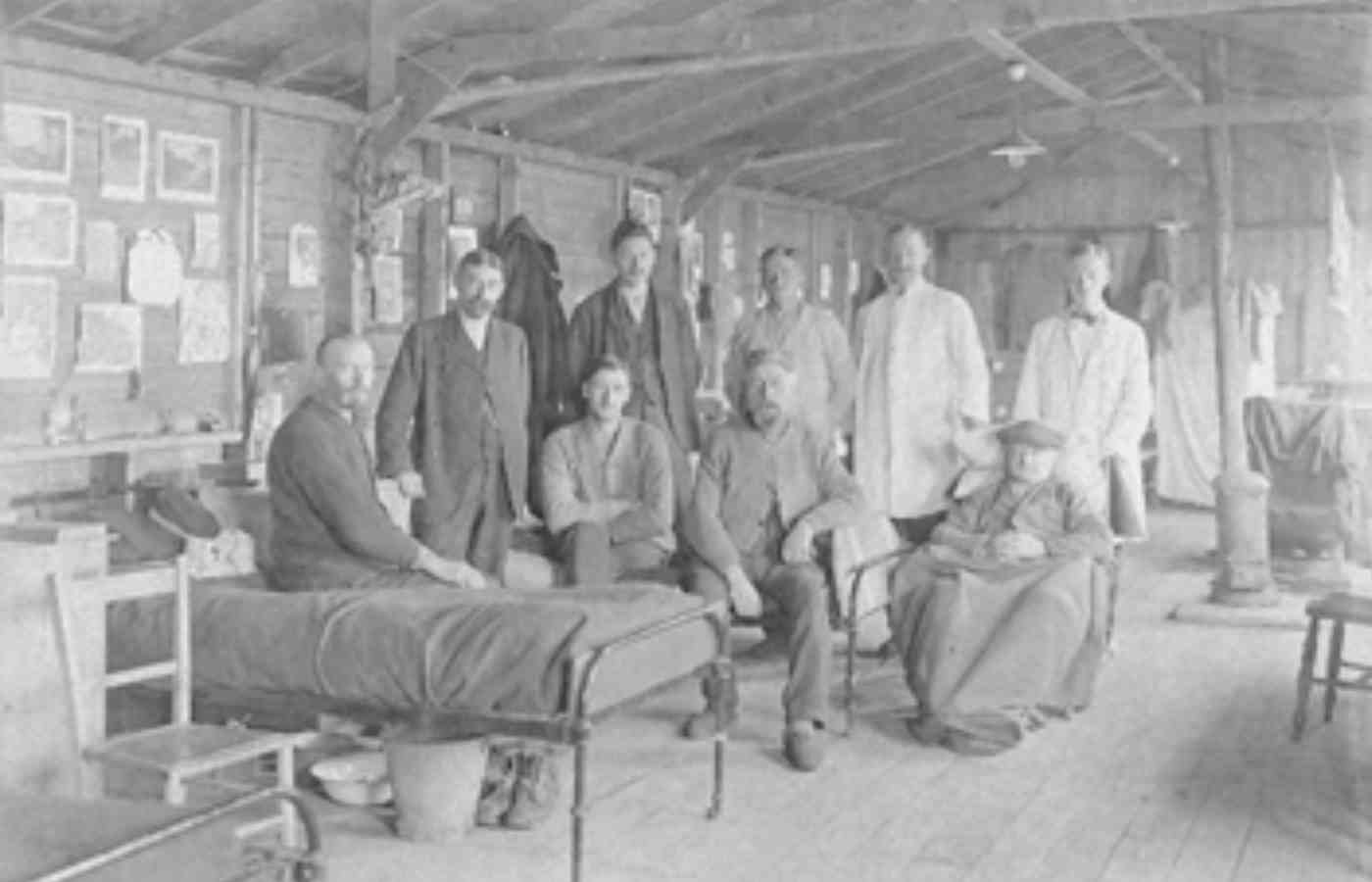
The history matters because it shows that Pilates developed as both a floor-based method and an apparatus-based system—not as a modern fitness trend.
Joseph Pilates did not originally call his method “Pilates”. He called it Contrology.
The name reflected his belief that the mind should direct the body with control and purpose. The exercises were not meant to be rushed or performed without attention. Movement quality mattered more than simply completing a large number of repetitions.
The body should move deliberately rather than relying on momentum.
Attention is part of the exercise, not an optional extra.
The method was designed to develop the body as an integrated system.
Progress came through repetition, discipline and refinement over time.
Joseph Pilates designed and refined several pieces of apparatus to support his teaching. These included early versions of the Reformer, Cadillac, Chair and Barrels.
The equipment was not created as a separate form of Pilates. It was part of the same method, offering resistance, support and feedback in different positions.
Important: Joseph Pilates developed both Mat work and apparatus work as connected parts of one system.
Our Pilates Equipment Explained guide looks at the different apparatus in more detail.
Joseph Pilates moved to New York in the 1920s and opened a studio with his wife, Clara. The studio shared a building with several dance organisations, and dancers became important early clients.
The method spread through students who went on to teach and develop their own interpretations. That is one reason Pilates now includes several schools and approaches rather than one identical style everywhere.
No. Dancers were important to the growth of Pilates in New York, but the method was not created solely for dancers.
Joseph Pilates worked with people from different backgrounds and promoted his system as a way to build a stronger, more balanced and better-controlled body.
Modern Pilates includes both classical and contemporary approaches. Some teachers follow Joseph Pilates' original exercise order and apparatus closely, while others adapt the method using current knowledge of anatomy, exercise and rehabilitation.
These approaches can look different, but many still share the same foundations: breathing, control, precision, concentration and coordinated whole-body movement.
Pilates has evolved, but evolution does not mean the original ideas have disappeared. The strongest modern teaching still understands where the method came from.
No. He was a physical trainer and movement teacher, not a qualified physiotherapist.
No. Dancers helped popularise the method, but his work developed across a much wider range of people and movement ideas.
No. Mat and apparatus work developed as connected parts of his system.
No. The method has developed in different directions, and modern classes vary considerably between teachers and training schools.
Photographs of Joseph Pilates are displayed in both Power of Pilates studios.
They are not there simply as decoration. They remind us that the method has a history, a purpose and a set of ideas that extend far beyond current fitness trends.
Every class may be taught in a modern studio, using contemporary knowledge and equipment, but it remains connected to the work he began more than a century ago.
Our Learning Centre can help you understand the method before choosing a class at Lower Earley or Crowthorne.

