Pilates is practiced by men of all ages and fitness levels. This guide explains what it develops, how Mat and Reformer differ, and what to expect when you begin.
Men attend Pilates for many of the same reasons as anyone else: to move better, become stronger, improve mobility and keep doing the activities they enjoy.
Yes. Pilates is a whole-body exercise method, not a women’s fitness class.
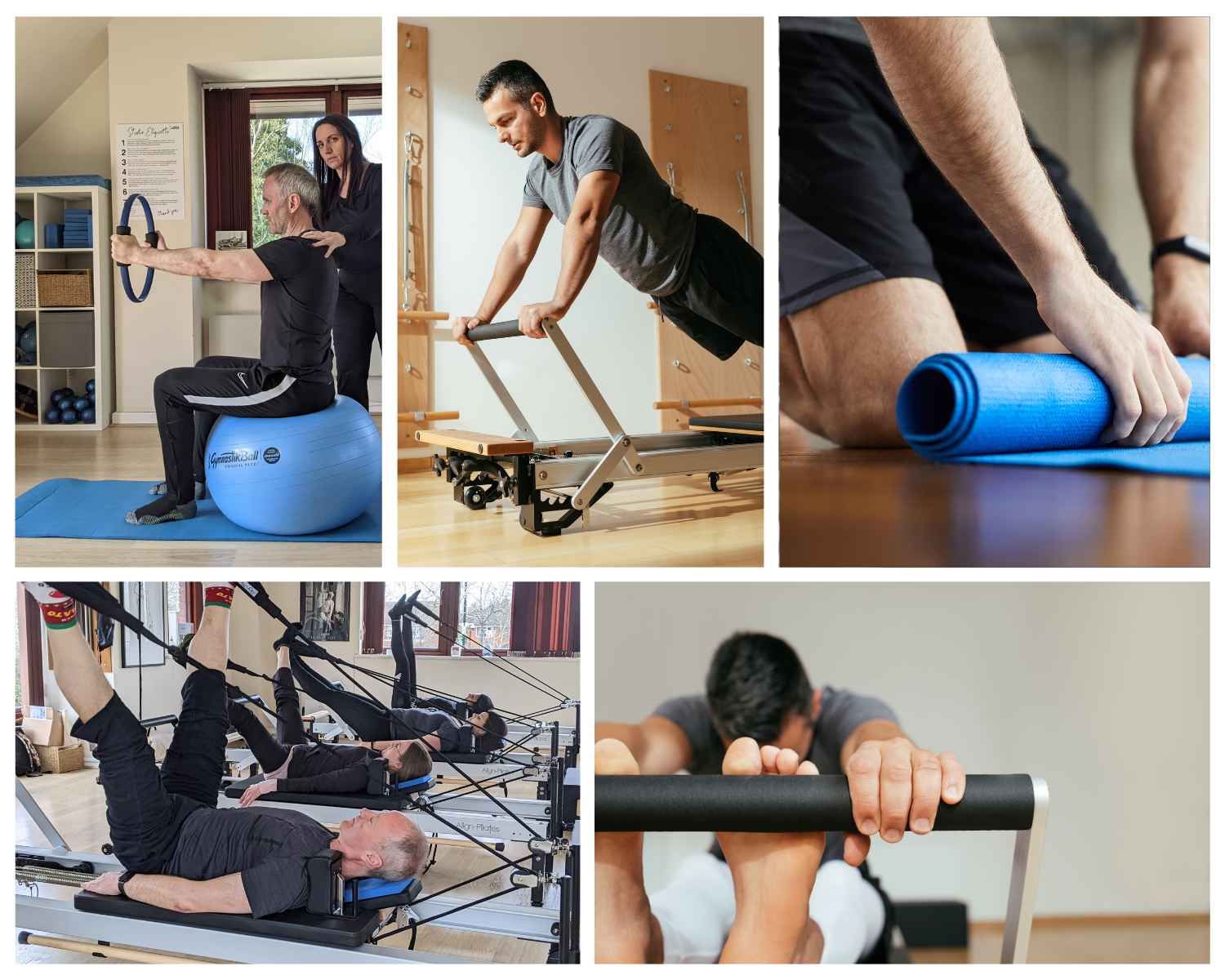
Men regularly attend both Mat and Reformer Pilates at Power of Pilates. Some come alongside gym training, golf, running or another sport. Others begin because they feel stiff, want to improve posture or need a structured way to build strength and control.
The exercises can be adjusted for different levels of experience, mobility and strength. You do not need to be flexible before you start, and you do not need previous Pilates experience.
The simple answer: Pilates can help men develop strength, mobility, balance, coordination and body awareness through controlled, precise movement.
Pilates builds strength through controlled movement rather than relying only on heavy loads or momentum.
Exercises move the spine, hips and shoulders through varied ranges while asking you to stay controlled.
Pilates develops awareness of how you sit, stand and organise your body during everyday tasks.
Many exercises challenge balance, timing and the ability to control several parts of the body at once.
Flexibility is only one part of Pilates. A class also includes strengthening, balance, coordination, spinal movement and control.
Exercises that look simple can be surprisingly demanding because they require you to move accurately, control your body weight and avoid using momentum to complete the movement.
Improved mobility does not mean forcing the body into extreme positions. It means developing enough range and control to move more comfortably and efficiently.
Yes. Pilates and weight training develop the body in different ways and can work well together.
Pilates does not have to replace your existing training. Many men use it to support the activities they already enjoy.
Pilates can be useful alongside sport because it develops qualities that transfer into many different activities. It does not need to copy the sport itself to be valuable.
Spinal mobility, hip control and balance can support the movement demands of a golf swing and walking a full round.
Pilates challenges single-leg stability, pelvic control and the coordination of the arms, trunk and legs.
Spinal, hip and shoulder movement can provide a useful contrast to spending long periods in one riding position.
Strength, balance and mobility matter for lifting, gardening, walking, working and remaining active as you get older.
Feeling stiff is one of the most common reasons men tell us they are considering Pilates. You do not need to become flexible before joining a class.
Pilates introduces movement gradually and gives you time to notice where your body moves easily and where it feels restricted. Over time, regular practice may improve mobility while also building the control needed to use that movement well.
Being stiff is a reason to begin, not a reason to wait. Your instructor can offer a smaller range or a different version while you build confidence.
Both use the same Pilates principles, and both can be challenging. The main difference is how resistance and support are provided.
Mat Pilates uses your own body weight, gravity and sometimes small equipment. It can be deceptively demanding because there is less external support.
The Reformer uses springs, straps and a moving carriage to add resistance, provide support and give immediate feedback as you move.
Neither is automatically better for men. The right choice depends on the type of movement you enjoy, your goals and the class environment in which you feel most comfortable.
You will not be expected to know the exercises or terminology. The instructor explains the movements and offers different versions where needed.
No. Men and women can attend the same classes. Exercises are adjusted for the individual rather than chosen according to sex.
No. Many people begin Pilates because they feel stiff. Your range can develop gradually through regular practice.
Yes. Pilates develops strength and endurance through controlled body-weight movement, springs and resistance. It is different from heavy weight training but can complement it well.
Not necessarily. The Reformer can support some exercises and make others harder. Mat can also be very demanding because your body provides much of the resistance and stability.
Contact us before booking. Depending on your symptoms and movement needs, a private session or advice from a healthcare professional may be the best starting point.
Men are welcome in all our suitable Mat and Reformer classes. Start with an introductory offer or contact us if you are unsure which class to choose.

